Do media narratives shape how AI is implemented – and it’s impact?
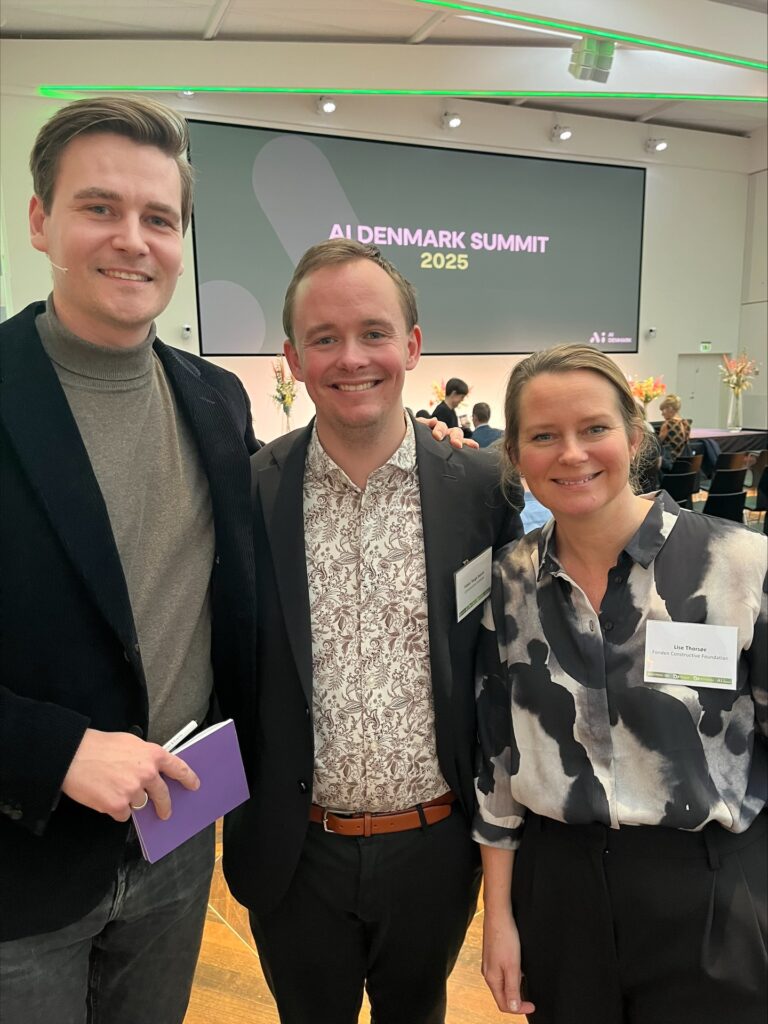
Our three AI Explorers presented their work at the AI Denmark Summit in Copenhagen.
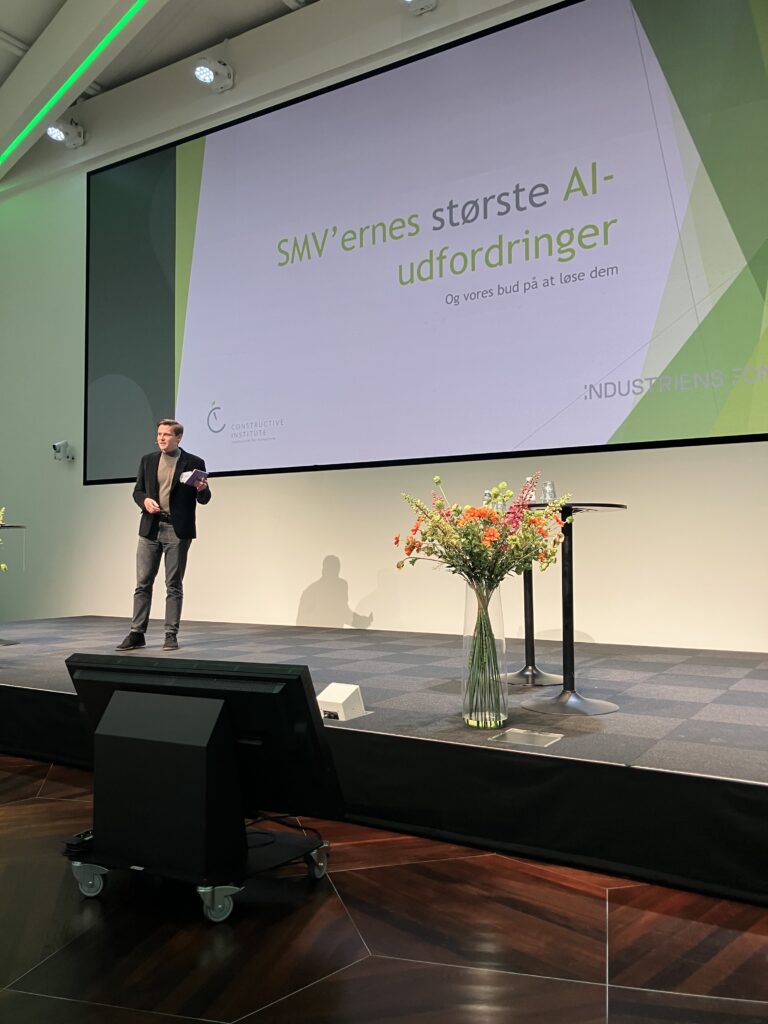
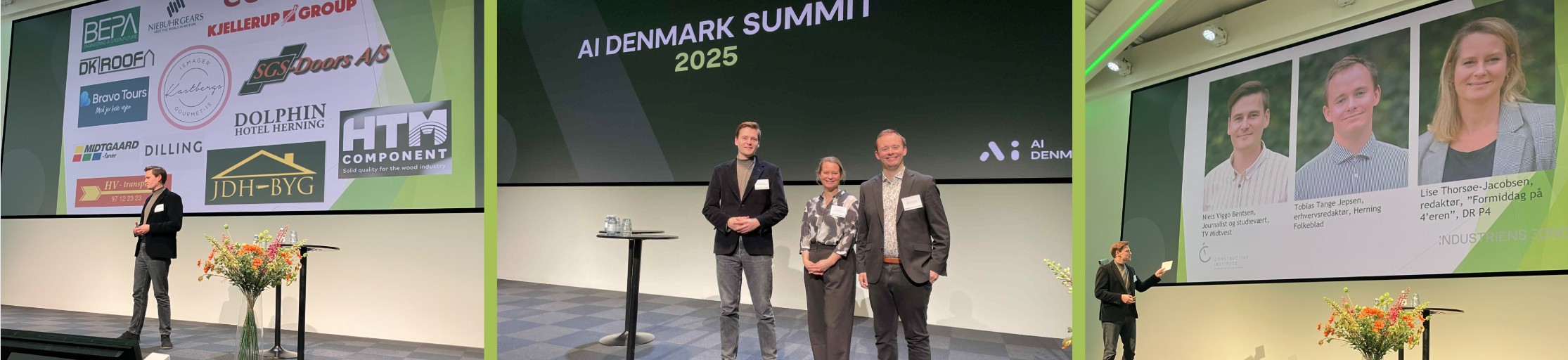
Over the past months, our AI Explorers Lise Thorsøe-Jacobsen (DR), Niels Viggo Troensegaard Bentsen (TV MIDTVEST) and Tobias Tange Jepsen (Herning Folkeblad) have visited a range of Danish production enterprises to explore how AI is being used in practice.
Through interviews, they examined the barriers and challenges companies face when implementing AI.
And then they asked an important question:
Can media – and the way we tell the story of AI – influence the process?
At the summit, they shared their key insights and reflections with the audience.
“We have visited many different types of companies, all based in Central Jutland. Among others, some construction companies, an architecture firm, a clothing manufacturer, a plumbing company, a travel agency, and an ice cream producer.”
Tobias Tange Jepsen
Based on the interviews they conclude that it is generally evident that whether a company adopts AI often depends on the individuals working there.
In many cases, it starts because someone in the organization already has an interest in tools like ChatGPT and begins using them at work, eventually introducing the idea to management. Very few of the companies they visited have a formal AI strategy in place.
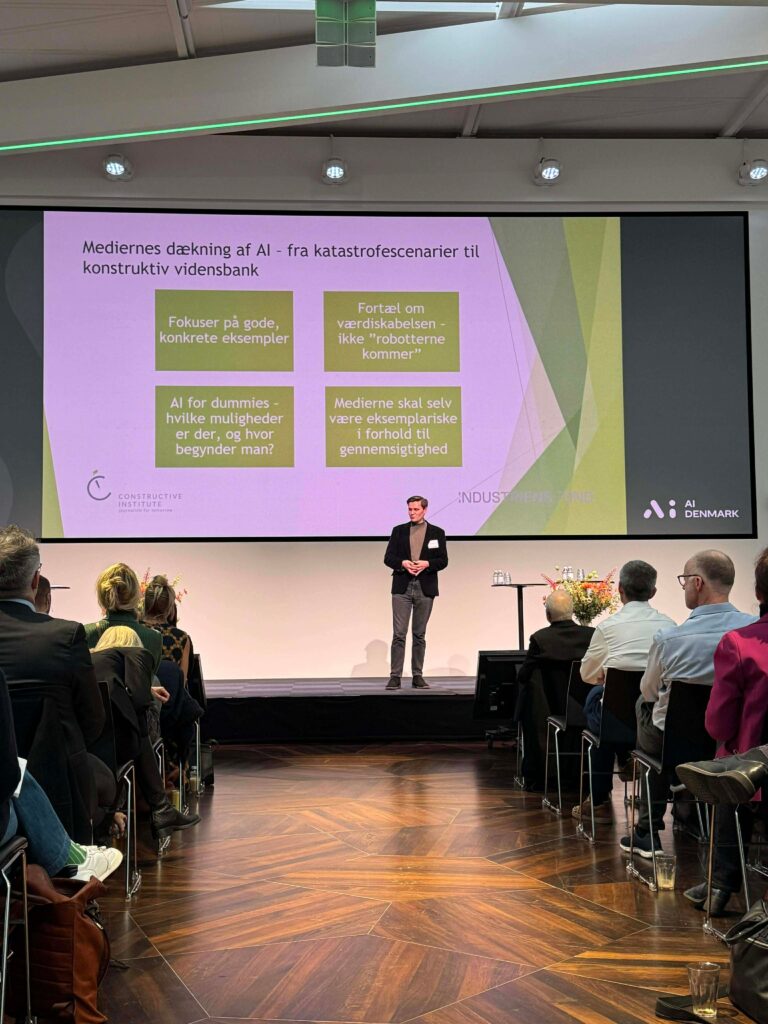
Some of the companies they visited are calling for the media to share more positive stories about AI. For example, they miss having more concrete case stories with people explaining what they use AI for in their company—good examples.
Several mention that they feel AI coverage in the media is often dominated by a “the robots are coming to take our jobs” narrative.
So one of our conclusions is that the media need to move away from portraying AI as something scary that might eventually make humans redundant, and instead focus on the things AI can help solve for people—including in SMEs.
And that is very much in line with the DNA of constructive journalism.
“Our findings show variations among SMEs in their adoption of AI tools. Some have fully embraced the technology, while others are only beginning to explore its potential. A few, however, see no clear application for it in their operations.”
Niels Viggo Troensegaard Bentsen
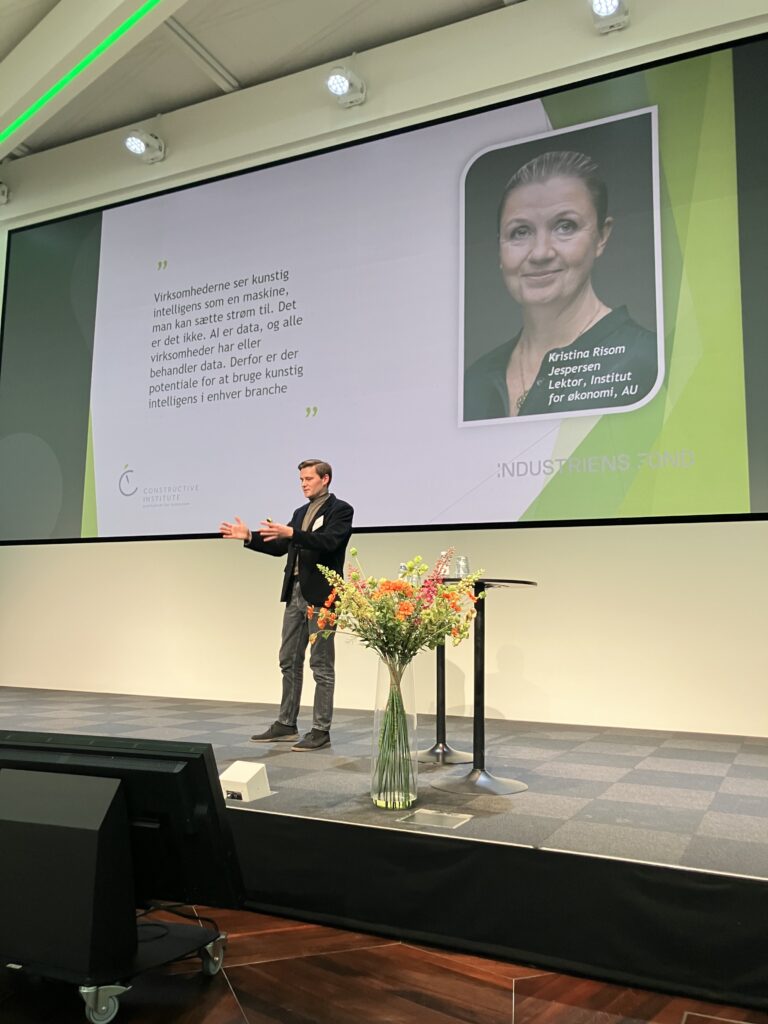
“One of the biggest barriers to implementing AI in SMEs is finding the time and resources to do so, especially when the company is small and must also focus on day-to-day operations and the bottom line. Another challenge is navigating the wide range of AI solutions available.”
Lise Thorsøe-Jacobsen
During their research the three AI-explorers also spoke with lecturer in economics at Aarhus University, Kristina Risom Jespersen, who researches the digitalization of businesses -Digitalization, Innovation, and Technology Adoption (DITA) among Danish companies.
Her advice to companies is to start small: experiment without major upfront costs and see what works for your business. There is no one-size-fits-all solution. However, every company can benefit from AI, as AI is essentially just data and a way to process data—and every business needs that.