
Constructive Journalism has momentum Down Under
27.05.2026
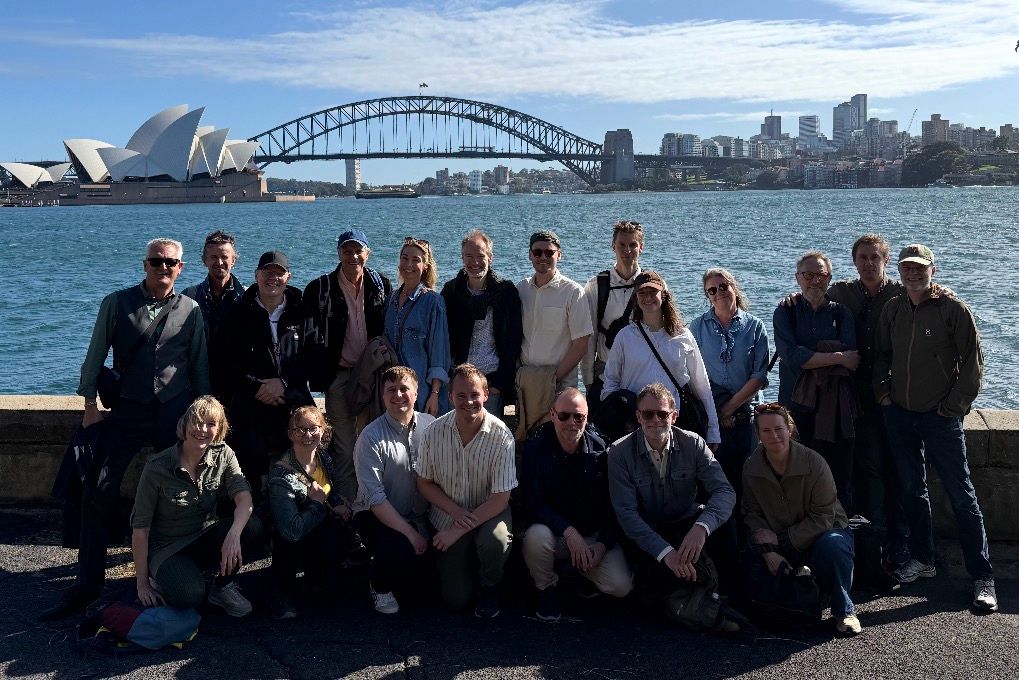

Our fellows just returned from Australia, where they visited our new sister institute at Monash University: The Constructive Institute Asia Pacific.
Last week the CI fellows went to Australia to visit our new sister institute at Monash University: Constructive Institute Asia Pacific, which opened last year.
Apart from the new hub at Monash University the fellows also met with media organizations such as the Conversation, the Age, ABC News, SBS and the Guardian to learn how they apply a constructive lens in their journalism.
From both the media and Monash University, the interest in constructive journalism Down Under was overwhelming.
“I’m blaffeled and humble by how far the Australian news media has implemented Constructive Journalism, since I introduced the mindset in a series of talks, debates and workshops here back in 2020,” says CEO and founder of Constructive Institute, Ulrik Haagerup.
In 2020, the Constructive Institute was invited by the Australian Associated Press to introduce the thinking through a series of presentations, debates and workshops around the country. Six years later, Haagerup is impressed to see how Australian media have now become part of the movement, and how Australia’s most prominent media have implemented constructive journalism with the aim of strengthening democracy and creating a better public debate:
“It was mindblowing to watch fellows from two continents sharing ideas on how to renew journalism. Hopeful to listen to journalism student’s enthusiasm on how to inspire, nuance and engage with their craft. And inspirational to see how both public service companies and commercial media work to implement a constructive approach in their content strategy and editorial rutines,” he says.
In March, Ulrik Haagerup was invited to speak for the National Press Club of Australia, and you can find that clip here.
Australian media are implementing Constructive Journalism
On the public service media ABC News the rise of AI have been an occasion to rethink their role as journalists:
“I think the things, that are alienating audiences are only going to get accelerated with the use of AI in our journalism. That’s both exciting for us – it’s going to unlock a lot of opportunities – but it’s also going to make things much more complex. I think we’ll only need to be more careful in thinking about our journalism and what that looks like; to be constructive, to be useful and to be there for our audience,” says editor of Impact and Strategy at ABC News, Ann Cordiner.
At the national and well-respected newspaper The Age, the third pillar of constructive journalism – dialogue – is applied in their climate and environment reporting in order to combat the news fatigue that stories on climate change often causes:
“Climate reporting can be depressing, environment reporting can also be depressing, but we didn’t want to turn our audiences off. We write stories about small practical things people could do, but also big things that politicians and policy makers can do. People are really responding, people want to see some good news as well as understand how bad the problems are. They want to learn, what policy makers can do to improve things, and they also want to know what they can do to improve things,” says Environment and Climate reporter at The Age, Bianca Hall.
At The Conversation we see strong examples of collaboration between researchers, journalists and local communities, and at the Guardian, the need for journalisms that strenghtens democratic participation and trust appears more evident than ever:
“I think the world is changing and we as news organizations know that our audiences are starting to pull away, they’re feeling overwhelmed, we’re seeing that fatigue. All of that stuff is happening. So I think we, as journalists and editors, need to think more about how we engage them and how we bring them back, because it’s important – not just for our business and our organizations – but for democracy and all those things that we care about as journalists,” says Pacific and New Zealand Editor at The Guardian, Virginia Harrison.