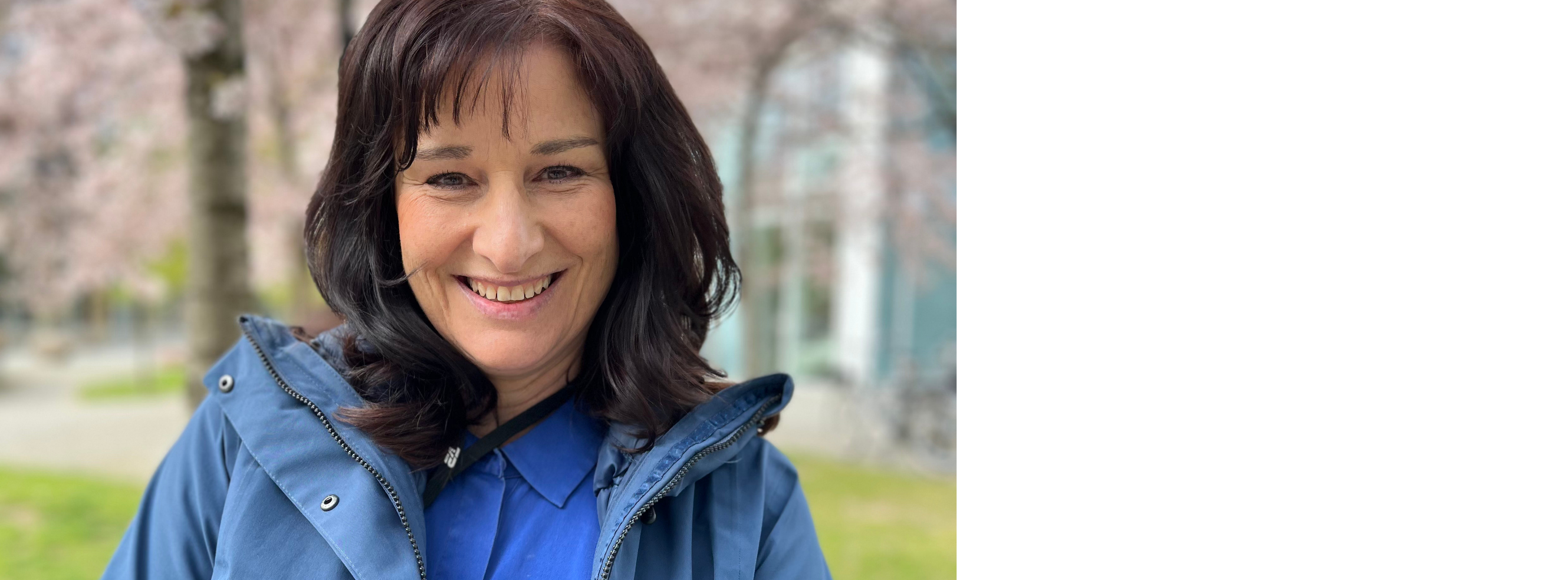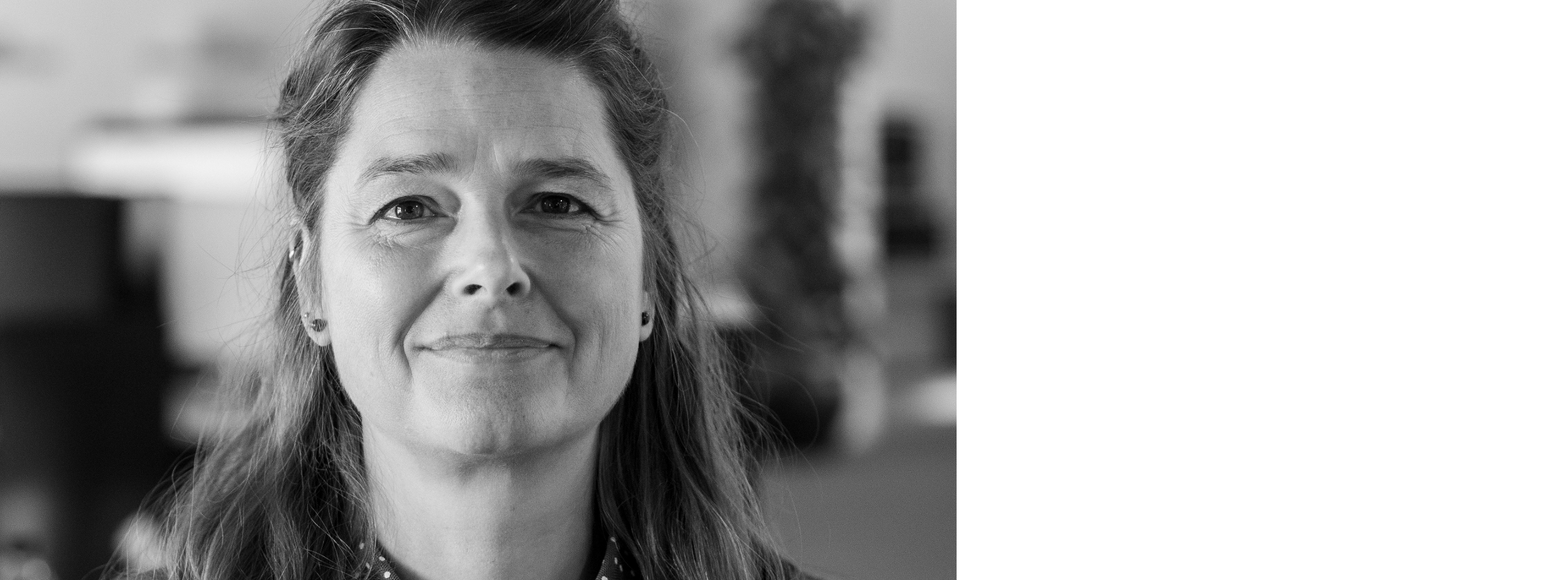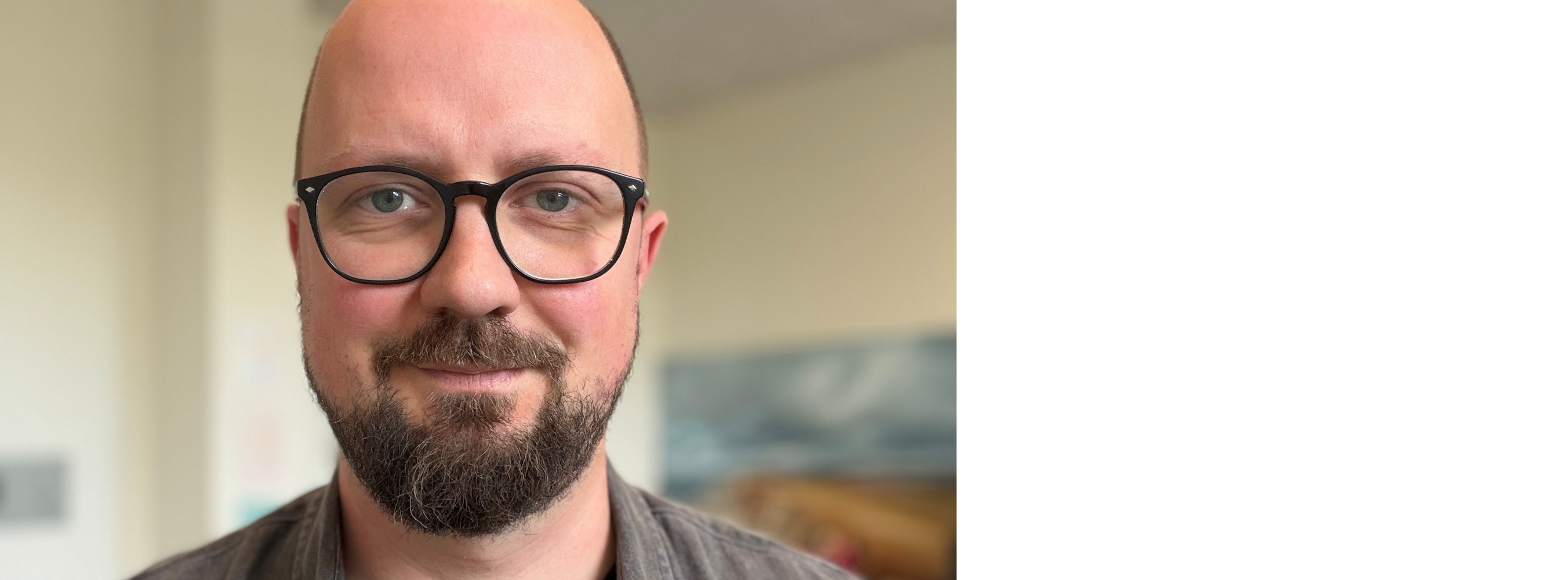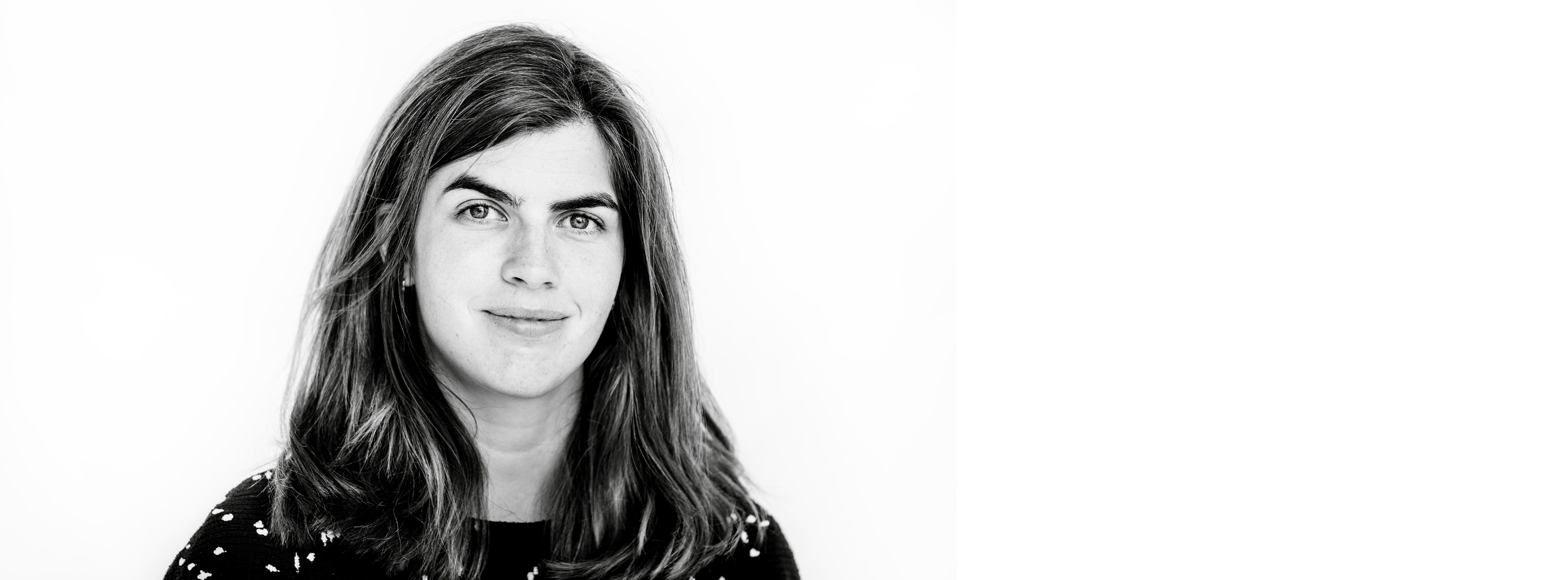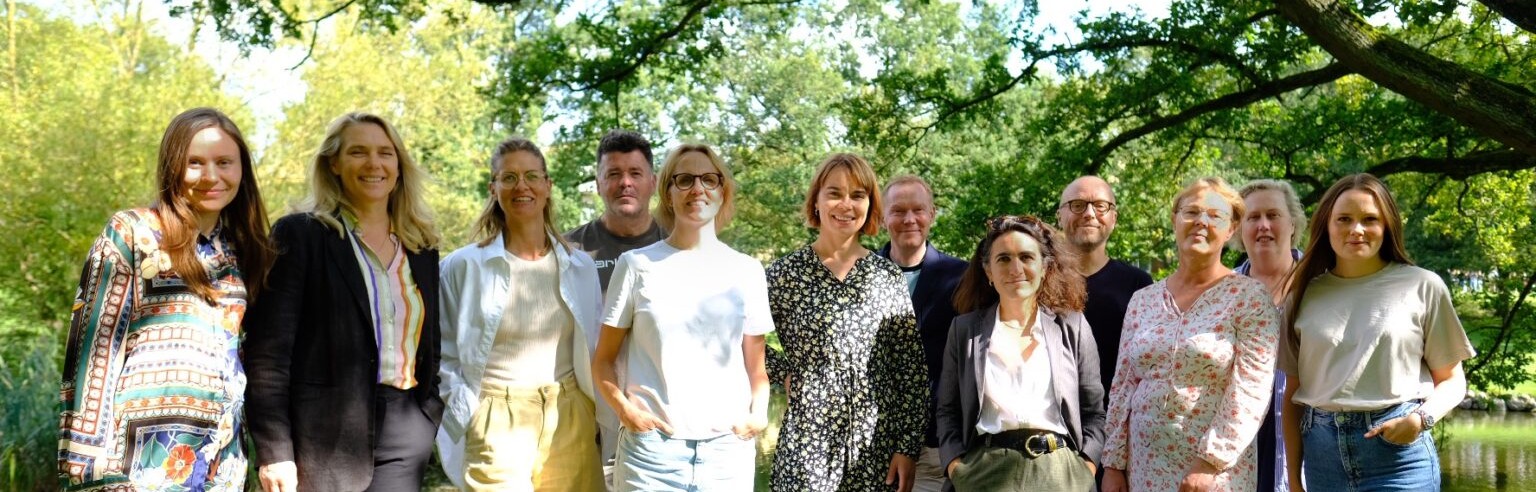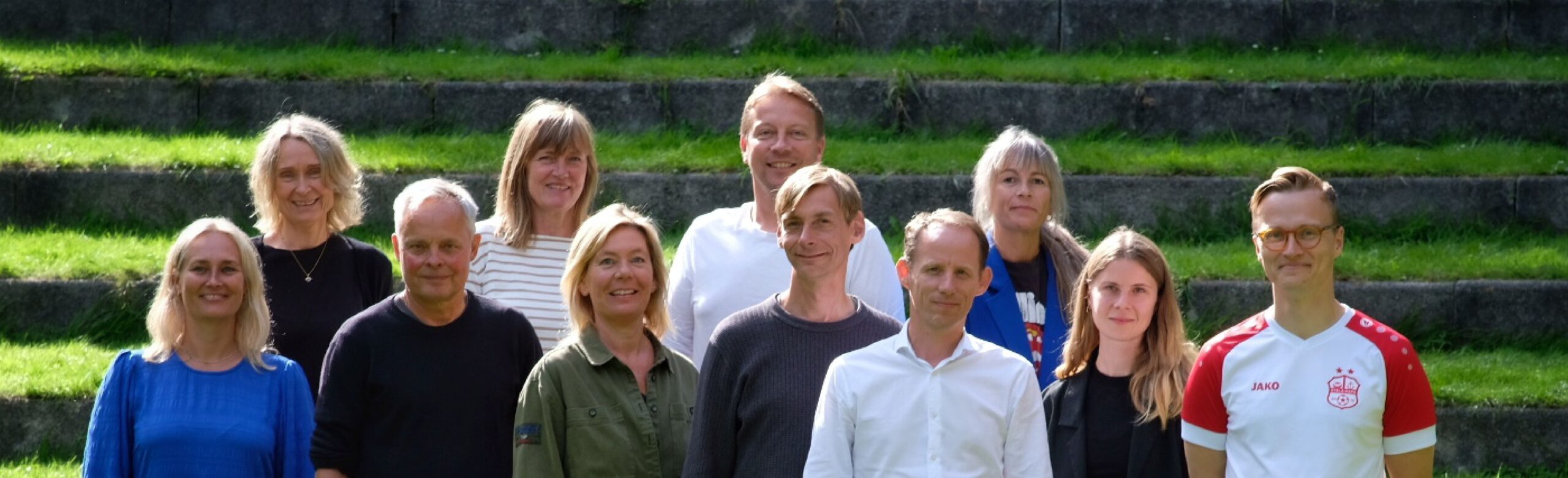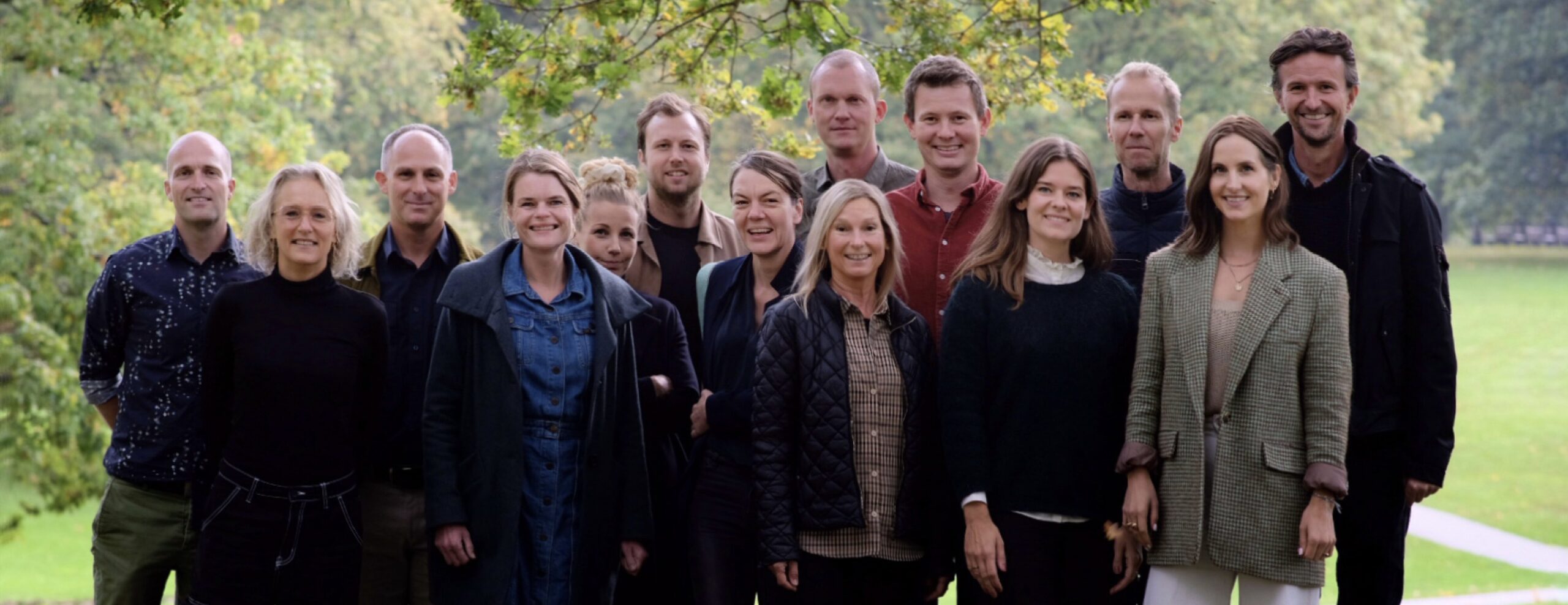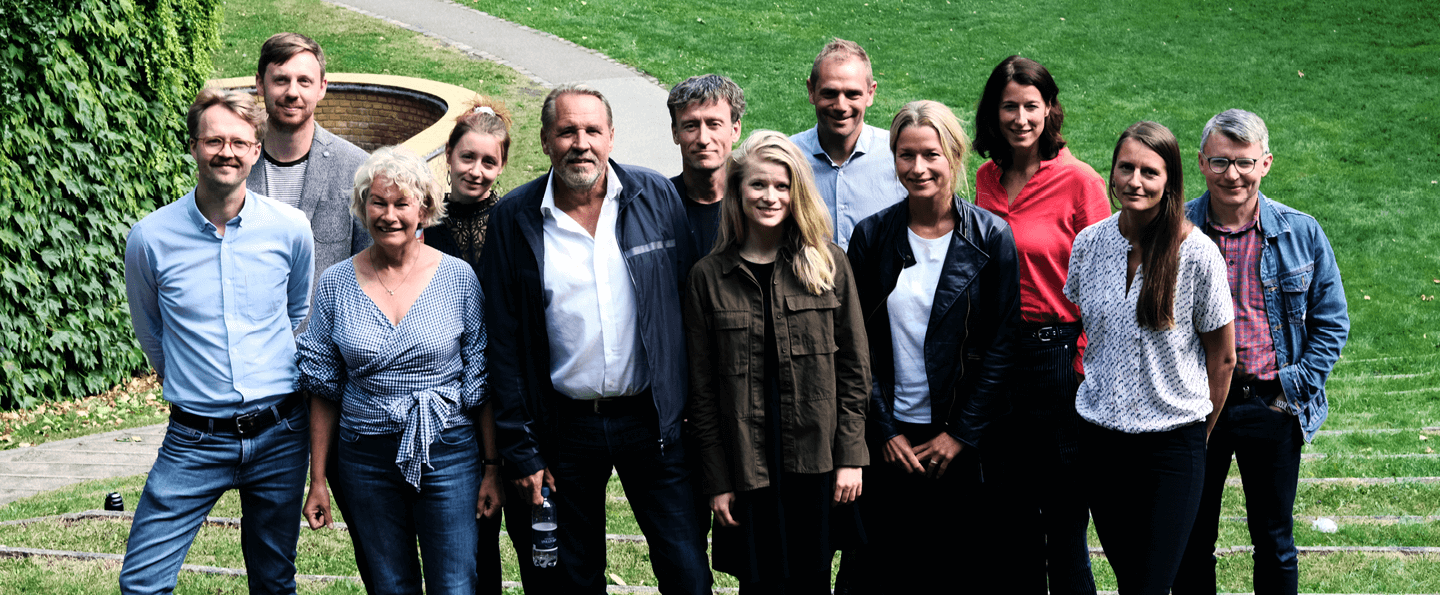
The Constructive Institute offers an annual fellowship program to around 10 media professionals to spend five or ten months at the Constructive Institute in Aarhus, Denmark. The fellows are expected to return to their newsrooms to share their insights with their colleagues and implement constructive reporting into their daily work.

Read More About The Fellowship
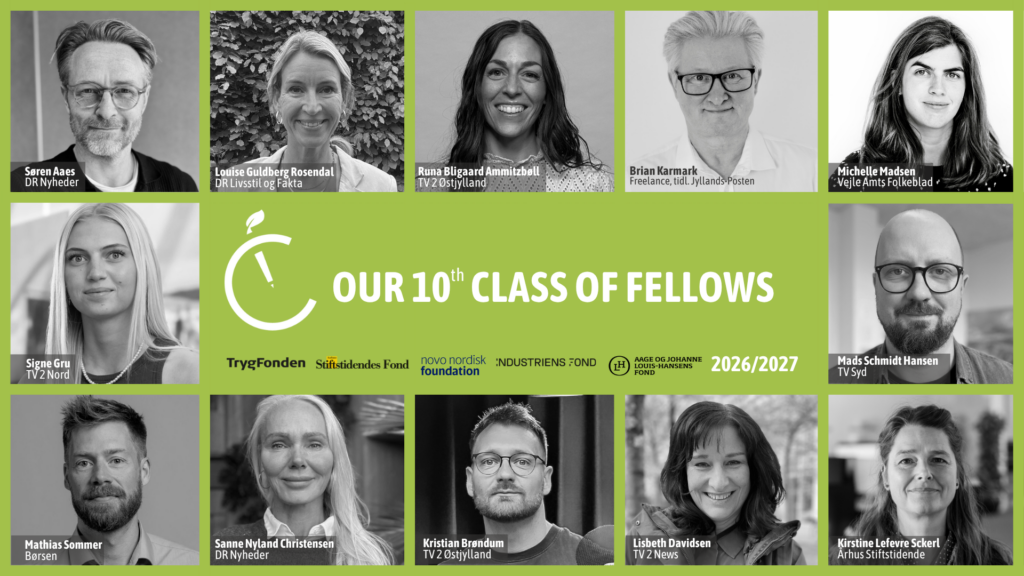
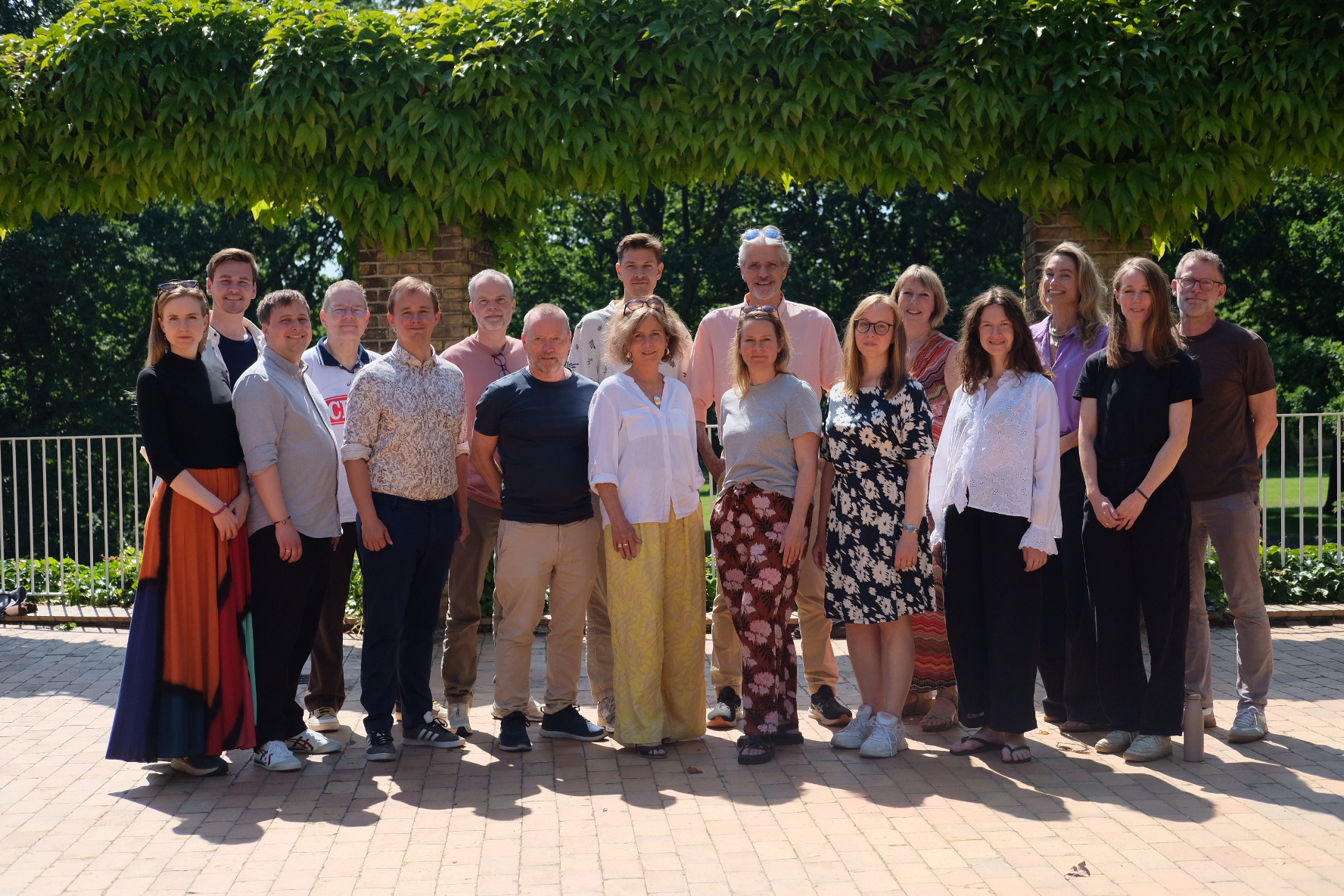
We are proud to present to you the talented constructive journalism fellows of 2026-2027.
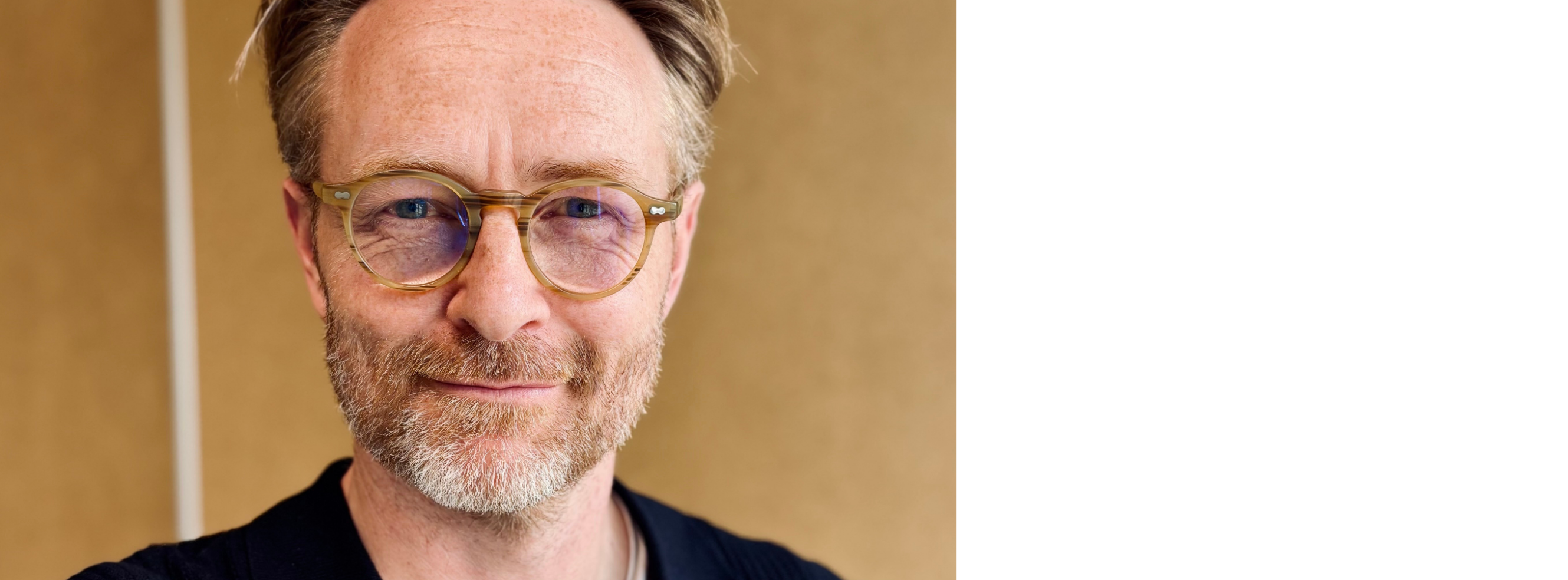
Søren Aaes

Novo Nordisk Fonden

BIO

Søren Aaes is an editor at dr.dk with more than two decades of experience in digital journalism and newsroom leadership. At DR Nyheder, Søren has held a wide range of key editorial roles, including front-page editor, business editor and news editor, helping to shape stories across platforms and to strengthen DR’s digital output. He has also contributed to the development of DR’s new article platform, representing journalists’ needs in building a lean and efficient CMS, and has served as a mentor and intern supervisor, guiding new journalists both professionally and personally. Earlier in his career, he worked at Berlingske and TDC Online after graduating from the Danish School of Media and Journalism.

FELLOWSHIP PROJECT

During his fellowship, Søren Aaes will explore the asymmetry between what we know about the consequences of climate change and how we actually behave as consumers and citizens. Is there a way to cover climate issues in mainstream media that does not push audiences away from the news, but instead increases engagement and a sense of agency?

Signe Gru

Industriens Fond AI Explorer

BIO

I am a TV journalist working as a reporter and a video journalist (VJ) experienced in producing stories across television, digital, and social platforms. Currently employed as a reporter at TV2 Nords current affairs desk responsible for covering lifestyle and culture. I have developed and produced television formats, including current affairs features and a documentary distributed on TV 2 Play. I hold a bachelor’s degree in journalism from the Danish School of Media and Journalism (DMJX).

FELLOWSHIP PROJECT

During the AI Explorer Fellowship, I will examine how artificial intelligence is currently being integrated into Danish companies, and how journalism can better reflect and explain these developments. Coming from a regional newsroom perspective, I will focus on how the AI transformation is affecting everyday working life in smaller and medium-sized companies across the country. I am interested in how citizens can be better equipped to navigate the ongoing AI transformation that is already reshaping work processes and decision-making across industries. Through conversations with companies and media practitioners, I will explore how AI can be made more accessible and meaningful to a broader audience, and how journalists can contribute to a more informed public debate.

Mathias Sommer

Industriens Fond AI Explorer

BIO

Mathias Sommer is an experienced reporter with an investigative profile and a constant flow of story ideas — some better than others — a trait that has followed him since starting as an intern at the regional newspaper Fyens Stiftstidende in 2011. He once imagined himself becoming a culture writer, but the unpredictable paths of journalism instead led him into the pulsating corners of the business world, where he is drawn to stories about money, power and explaining society’s complexities.

Today, Mathias works at the Danish business daily Børsen, where he has been a reporter since 2022 with a strong focus on investigative and in-depth stories. Before joining Børsen, he spent six years at DR’s business and economics desk, primarily as a writing reporter, while also contributing to radio and television programmes.

FELLOWSHIP PROJECT

During his AI Explorer Fellowship at Constructive Institute, Mathias Sommer will explore how artificial intelligence is changing Danish companies — and how business journalism can cover this transformation with greater depth and precision. With a background in investigative business reporting, he will examine the implications of AI for workflows, productivity, decision-making and accountability, while also looking at how journalists can avoid hype and generic coverage. His goal is to help develop more useful, critical and nuanced journalism about – and with the use of – AI — and to better understand how the technology can strengthen, rather than hollow out, the role of the business reporter.

Sanne Nyland Christensen

TrygFonden

BIO

Sanne Nyland Christensen is a highly experienced media professional who has spent the past 14 years working for the Danish Broadcasting Corporation. She has primarily served as a host on Denmark’s largest national radio channel, P4, while also working as an editor, live reporter, and co-developer of new concepts and programmes for both television and radio. Prior to joining DR, she spent 10 years as a print journalist with the Berlingske Media Group. Sanne Nyland Christensen holds a degree in Journalism from the Danish School of Media and Journalism, as well as a bachelor’s degree in Business Law from Aalborg University.

FELLOWSHIP PROJECT

Through her fellowship, Sanne will explore and test the level of trust within the Danish society and examine how constructive journalism can help strengthen social cohesion. In essence, the project aims to build bridges across – and despite – economic, geographic, cultural, and social divides. All for the benefit of democracy.

Kristian Brøndum

Industriens Fond AI Explorer

BIO

Kristian Brøndum is a journalist, editor, and graphic designer at TV2 Østjylland, where he covers stories, shapes the visual identity of the station’s digital platforms, and is part of the station’s AI Frontrunner team — a role that lets him experiment with AI tools and turn that experimentation into practical solutions for his colleagues. In recent years, he has focused on how AI can reduce the friction between a good story and the many tasks that come with telling it on a visual, digital platform. Kristian brings broad, hands-on experience from a range of newsrooms, and his approach to journalism is shaped by several different educations but always with the user at the center. To Kristian, journalism is constructive at its core, and it is at its most meaningful when it has a direct impact on citizens and the society we share.

FELLOWSHIP PROJECT

From February to late June 2026, Kristian Brøndum will participate in the Constructive AI Explorers program to investigate how media coverage of artificial intelligence actually reaches and resonates with the citizen. With AI moving at fast speed, he wants to understand how journalism can develop, refine, and ultimately make its coverage more constructive at its foundation, so that ordinary people are not left behind in the AI revolution unfolding around them. Kristian will bring this knowledge back to the Danish media industry and use it to shape how AI is covered in local news in East Jutland.

Lisbeth Davidsen

Novo Nordisk Fonden

BIO

Lisbeth Davidsen is a seasoned reporter with four decades of experience on the frontlines of Danish and international news. In the early 1990s, she reported from the war-torn Balkans and covered Albania’s transition from communism to democracy. From 1992 to 2007, she was based in Rome, working for Berlingske, Information, Weekendavisen and Politiken. She followed Italy’s dramatic reckoning with corruption through Operation Clean Hands and the state’s escalating battle with the mafia in the wake of the assassinations of judges Falcone and Borsellino. She went on to report through the Berlusconi era, while also covering the Vatican, including the death and funeral of Pope John Paul II. She expanded her focus to the Middle East, reporting on key milestones such as the 50th anniversary of the State of Israel. Since the launch of TV 2 News, Lisbeth has been a prominent part of Denmark’s leading news channel. She has worked as a studio anchor, a desk reporter, and, for the past 15 years, as a live reporter in the field.

FELLOWSHIP PROJECT

During her fellowship in Life Science, Lisbeth Davidsen will turn the spotlight on mental health at a time when growing numbers of people are struggling with stress, anxiety, and depression. She will explore how the latest research and rapidly evolving technologies in the field of Life Science could help reverse this trend and strengthen the public’s mental well-being. What new breakthroughs are on the horizon for people living with mental distress? And how can the media do a better job of translating complex scientific insights into knowledge that empowers individuals and society to act?

Kirstine Lefevre Sckerl

Aarhuus Stiftstidendes Fond

BIO

Kirstine Lefevre Sckerl is an experienced journalist employed at Århus Stiftstidende in Aarhus, Denmark. For the past 15 years, she has been a key member of the newspaper’s culture and city life editorial team. Over the last four years, she has also served as co-editor of the newspaper’s magazine Mærk Aarhus, which focuses on culture, gastronomy, and shopping in Aarhus. In her work as a journalist, Kirstine Lefevre Sckerl is not only a writer and reporter, but also produces her own photography and video content. She graduated from the Danish School of Media and Journalism (DMJX) in 2004 and was subsequently employed by the free daily newspaper Urban. Since 2007, she has worked at Århus Stiftstidende in a variety of roles and is highly experienced across several journalistic genres.

FELLOWSHIP PROJECT

As a local news outlet, engaging readers in stories about Aarhus’ cultural life can be a challenge. This may seem paradoxical, as studies show that culture is a key part of the city’s identity and plays an important role in citizens’ well-being and sense of belonging as residents of Aarhus. This is the dilemma Kirstine Lefevre Sckerl aims to explore during her fellowship. Can a local newspaper play a more active role and maybe interact with the cultural life of the city? Kirstine Lefevre Sckerl wish to investigate experiences with citizen involvement in cultural journalism and explore new ways of engaging readers. She is interested in whether cultural coverage can become more engaging through initiatives such as reader panels, review communities, and alternative media formats.

Mads Schmidt Hansen

TrygFonden

BIO

Mads Schmidt Hansen is a journalist and editorial leader with more than two decades of experience in digital and television news, investigative journalism, and newsroom development. He currently works as a reporter at tvSyd. Prior to this, he served for six years as Managing Editor at tvSyd, with overall responsibility for news across television, digital, and social media platforms. Alongside his editorial leadership, he led strategic and public-facing projects ranging from election coverage and investigative reporting to citizen science initiatives and newsroom well-being programmes.

Before joining tvSyd, he worked as a reporter and editor at TV 2 NEWS and TV 2 Nyhederne, covering politics, current affairs, and breaking news across television and digital platforms. Earlier in his career, he worked at TV 2 Østjylland and DR Nordjylland as a reporter and duty editor.

FELLOWSHIP PROJECT

During his fellowship Mads Schmidt Hansen will explore how user involvement can strengthen trust, relevance, and engagement in local and regional journalism. The project examines how users can become active contributors to journalism — not only through feedback, but by helping shape editorial priorities, identify relevant questions, and participate in ongoing dialogue with journalists.

Michelle Madsen

Aarhuus Stiftstidendes Fond

BIO

Michelle Madsen is a journalist at the local newspaper Vejle Amts Folkeblad, where she primarily reports on climate, the environment and business. Since 2018, she has covered the effects of climate change and reported on local sustainability initiatives in Vejle Municipality. She was among the first journalists to cover the environmental collapse of Vejle Fjord and has in recent years reported on the aftermath of flooding in the city of Vejle. She focuses on telling stories through the people most affected by climate change and bringing nuance to an often complex debate. Michelle holds a degree in journalism from The Danish School of Media and Journalism and has worked with local journalism for eight years.

FELLOWSHIP PROJECT

During her fellowship in the autumn of 2026, Michelle will explore how local and regional media can strengthen their coverage of climate change and how the media can make complex agendas relatable to readers. She will focus on how local and regional media can use constructive journalism to increase engagement and involvement among citizens, businesses and politicians in local climate issues. How can the media tell climate stories without relying on doomsday headlines? Climate journalism is not only for specialist journalists but a mindset that can inform all areas of journalism. Michelle’s goal is to inspire local journalists to produce more climate journalism that resonates with readers.

Brian Karmark

Aarhuus Stiftstidendes Fond

BIO

Brian Karmark has served as Head of Photography at Sydsvenska Dagbladet, Fyens Stiftstidende, and most recently Morgenavisen Jyllands-Posten. In his editorial roles, he has been closely involved in the development of visual journalism and photographic practice over the past 25 years. He graduated as a photojournalist from DMJX in 1997 and has since worked across local, regional, and national media organisations. He has been an external examiner at DMJX since 2007 and has also lectured in the international photojournalism programme. In addition, he is an internationally certified ICI Business Coach and holds a certification in change management

FELLOWSHIP PROJECT

The number of staff photographers in local and regional media has declined significantly over the past 20 years. Due to falling revenues, media organisations have made substantial cuts, often chosen to retain journalists while reducing visual capacity. Visual content is still produced, but it is now largely created by journalists and, in some cases, by sources themselves. What went wrong in this transition and why were photographers deprioritised? And more importantly, what does the future look like? In his fellowship project, Brian Karmark explores how local and regional media can strengthen their visual expression and develop a more ambitious visual future that supports both relevance and sustainability. The project will be based on interviews with media leaders and experts, focusing on both the current state of visual journalism and the ideas shaping its future. It will also highlight emerging examples from across the media landscape, pointing to new possibilities for visual storytelling in local and regional news. Brian Karmarks ambition is to create a forward-looking body of work that can inspire reflection and discussion across the media industry

Runa Bligaard Ammitzbøll

Novo Nordisk Fonden

BIO

Runa Bligaard Ammitzbøll is an experienced news anchor and live reporter who has spent her entire career working in local news journalism. Since 2018 she has been a TV-host at TV2 Østjylland, communicating relevant stories in a nuanced, precise, and personal way. She is also hosting a podcast, has moderated talks at Smukfest, and produced her own short documentary on pregnancy – all with the ambition of facilitating constructive conversations and breaking down prejudice. Runa graduated in Journalism from University of Southern Denmark in 2016 and has worked across three different regional TV 2-stations since.

FELLOWSHIP PROJECT

During her fellowship, Runa will explore how children and young people struggling with poor mental health, depression and anxiety can be supported more quickly and more effectively. According to the National Health Profile 2025, mental well-being is declining in Denmark, contributing to long waiting times in psychiatric care and significant costs related to parents’ loss of income. The project will therefore examine which initiatives, support programmes and approaches, are needed to reverse this development. It will also explore whether the media can play a stronger role in identifying and covering the organisations, initiatives, and professionals that are succeeding in improving the mental health of children and young people – and how these examples may serve as inspiration elsewhere.

Louise Guldberg Rosendal

TrygFonden

BIO

Louise Guldberg Rosendal is an experienced journalist, producer, and format developer who has worked in television since 2006 – first within the private production industry and later at the Danish Broadcasting Corporation (DR), where she has worked for the past 18 years. Throughout her career, she has been driven by a curiosity about people and the stories that connect us. She has worked across genres including documentary, factual, lifestyle, and entertainment, creating content for broad audiences with a strong focus on human connection, reflection, and engaging storytelling. Louise holds a Master’s degree (cand.mag.) in Media Studies from Aarhus University.

FELLOWSHIP PROJECT

During her fellowship, Louise will explore the role media plays in sustaining and strengthening trust in Scandinavian societies – and the importance of trust for well-functioning democracies. She will investigate how journalism and storytelling can help maintain and strengthen trust in a time of increasing polarization and fragmentation. Her project is driven by a growing curiosity about how media narratives shape the way we see one another, our communities, and democratic institutions. Drawing on her experience in public service media, she wants to explore whether more constructive and nuanced storytelling approaches can foster greater understanding, connection, and democratic resilience – while maintaining journalism’s critical and independent role. Through the fellowship, Louise hopes to develop new perspectives on how journalism can contribute to a more balanced, trust-enhancing, and constructive public conversation