How can we cover health more constructively? Two fellows have concrete proposals
12.08.2026
Health journalism deals with some of the most difficult questions in society: How should limited healthcare resources be prioritised? And what happens to the relatives of those who are ill? During their fellowships at the Constructive Institute, journalists Tea Krogh Sørensen and Louise Sloth explored how media can cover health more constructively.
Tea and Louise approach health journalism from different angles. One looks at the difficult societal choices behind healthcare decisions. The other looks at the personal stories of those living alongside serious illness.
But both point towards the same opportunity: to move beyond simplified narratives and make more room for context, complexity and the voices that are often missing.
Their reports offer journalists practical tools for creating health journalism that not only informs audiences about what is happening, but helps them better understand the people, choices and dilemmas behind the story.
Read the reports:
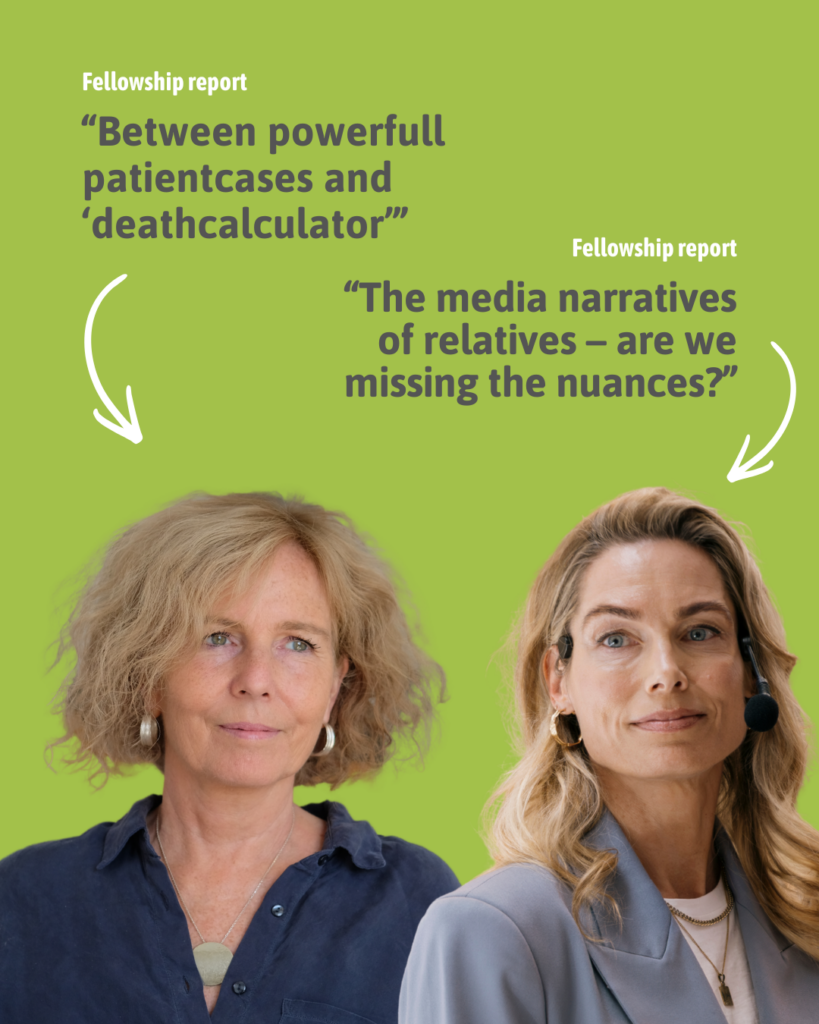
- “Between Powerful Patient Stories and Death Calculator” by Tea Krogh Sørensen.
- “The Media Narratives of Relatives – Are We Missing the Nuances?” by Louise Sloth.
From criticism to conversation
In her report “Between Powerful Patient Stories and Death Calculator”, Tea Krogh Sørensen explores how journalism can contribute to a more nuanced and democratic conversation about the difficult choices behind healthcare priorities.
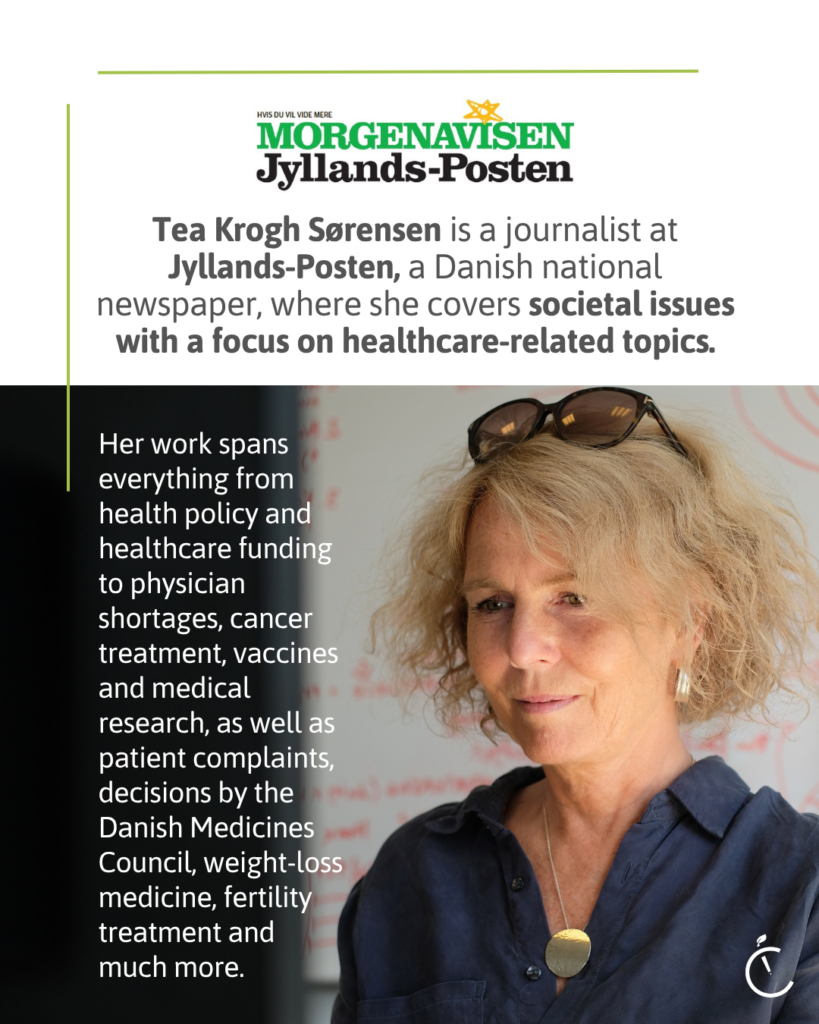
Tea is a journalist at Jyllands-Posten, where she covers societal issues with a focus on healthcare. During her fellowship, she analysed nearly 60 news articles and interviewed key voices across the healthcare sector.
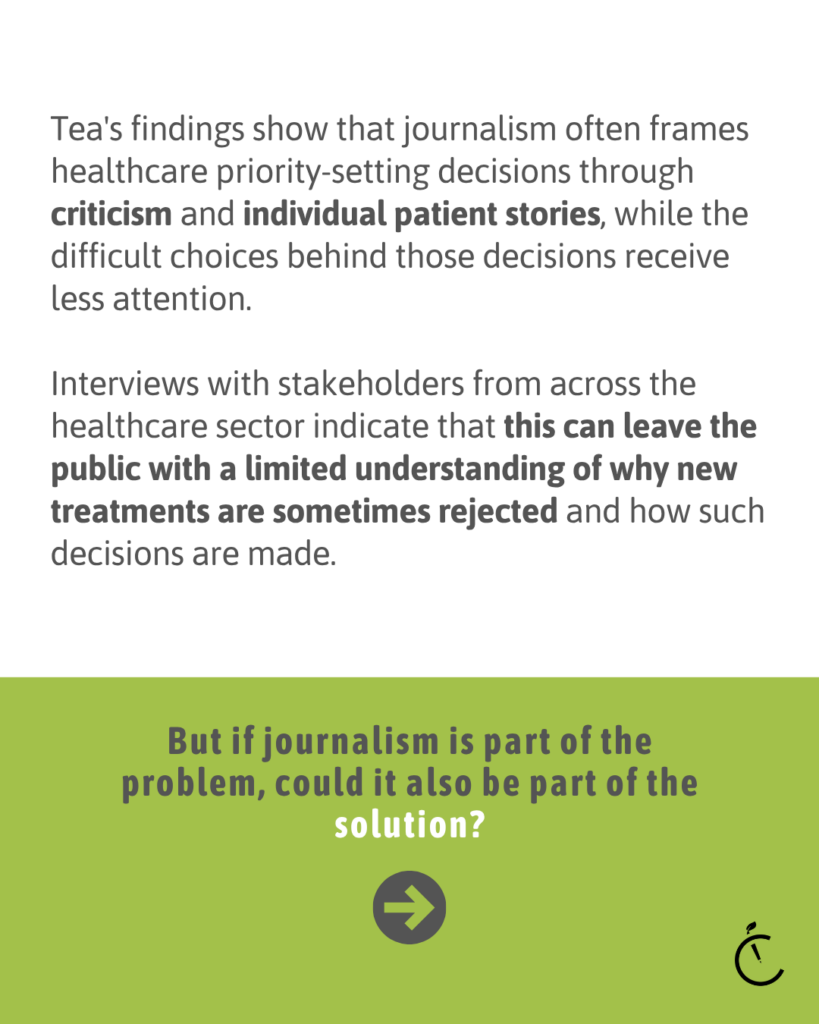
Her research suggests that coverage of healthcare priority-setting often centres on criticism and individual patient stories, while the broader dilemmas behind decisions receive less attention.
The result can be a public conversation where audiences understand who is affected by a decision, but not necessarily why the decision was made or what competing considerations were involved.
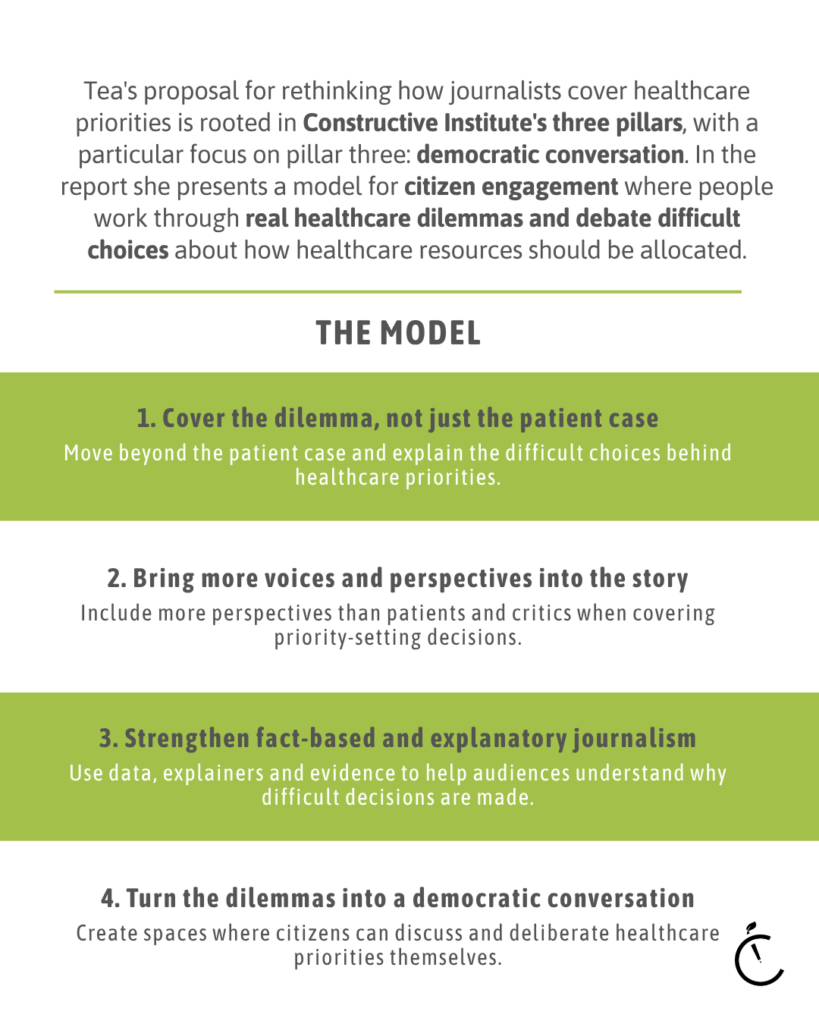
Tea proposes four ways journalists can broaden the conversation:
- Cover the dilemma, not just the patient case. Explain the difficult choices behind healthcare priorities.
- Bring more voices and perspectives into the story. Include perspectives beyond patients and critics.
- Strengthen fact-based and explanatory journalism. Use data, evidence and explainers to make complex decisions easier to understand.
- Turn the dilemmas into a democratic conversation. Create opportunities for citizens to discuss and deliberate on difficult healthcare choices.
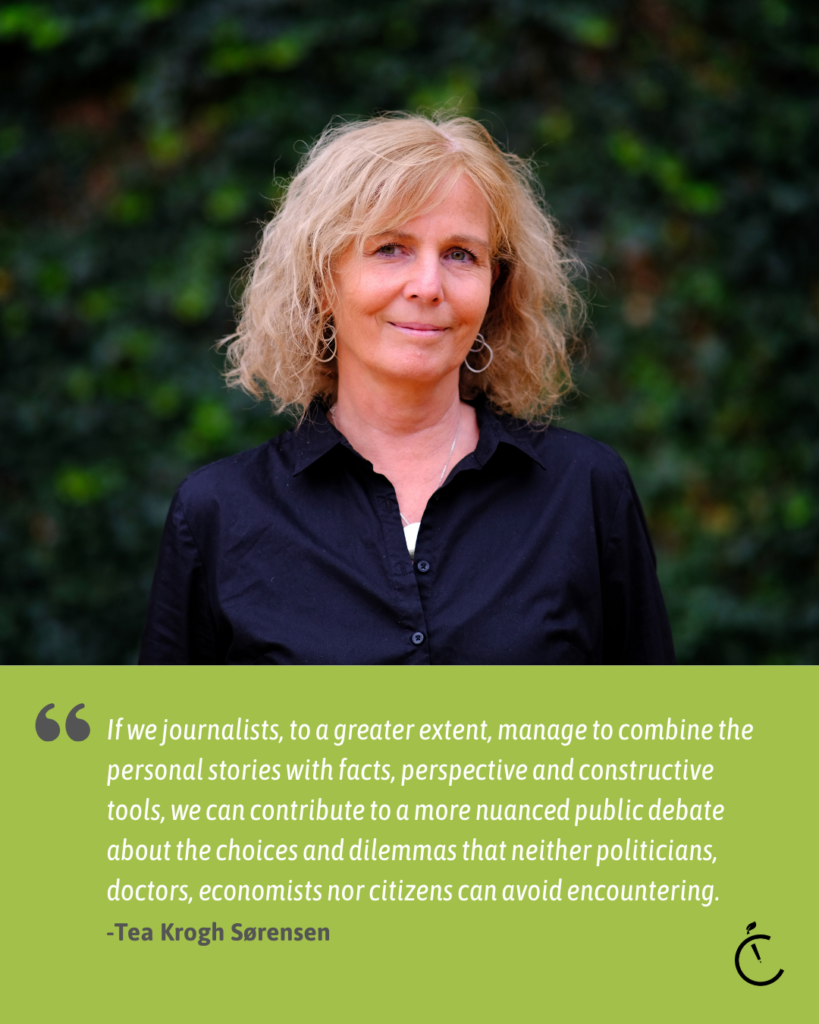
“If we journalists, to a greater extent, manage to combine the personal stories with facts, perspective and constructive tools, we can contribute to a more nuanced public debate about the choices and dilemmas that neither politicians, doctors, economists nor citizens can avoid encountering,” Tea says.
For Tea, the fellowship also provided an opportunity to step back from everyday journalism, engage with academic research and reflect on her own practice:
“I return to Jyllands-Posten with renewed knowledge, inspiration and perspective.”
Are we missing the nuances when portraying relatives?
In her report “The Media Narratives of Relatives – Are We Missing the Nuances?” Louise Sloth takes a closer look at another often overlooked perspective in health journalism: the relatives of people living with serious or chronic illness.
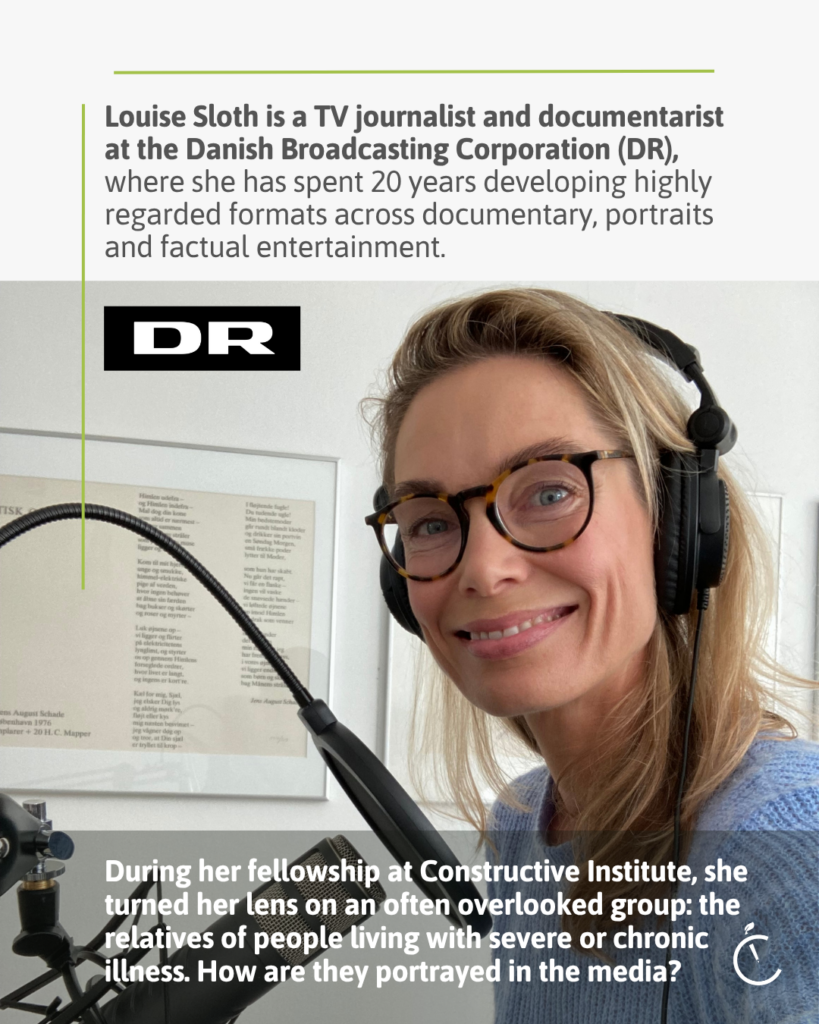
Louise is a TV journalist and documentarist at the Danish Broadcasting Corporation (DR), where she has spent 20 years developing formats across documentary, portraits and factual entertainment.
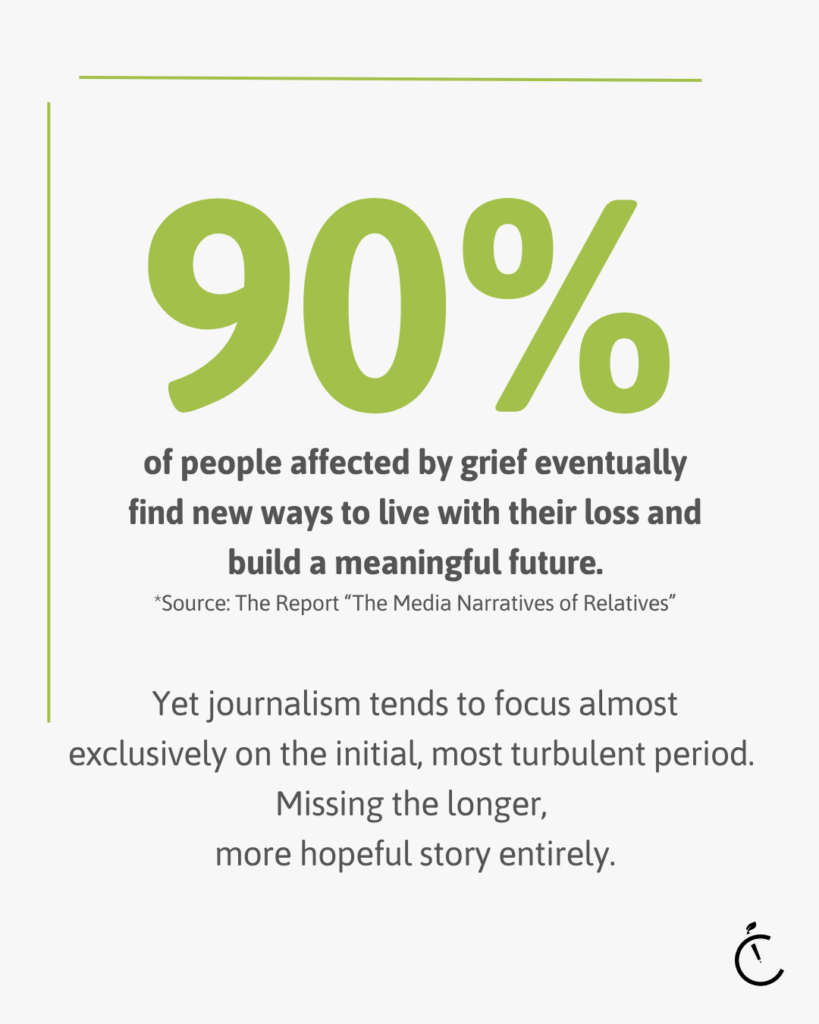
During her fellowship, she explored how relatives are portrayed in the media. Her findings point to a tendency to simplify their stories. Relatives are often presented either as victims of an unfair situation or as a resource supporting an overstretched healthcare system.
But their lives are more complex than these roles suggest.
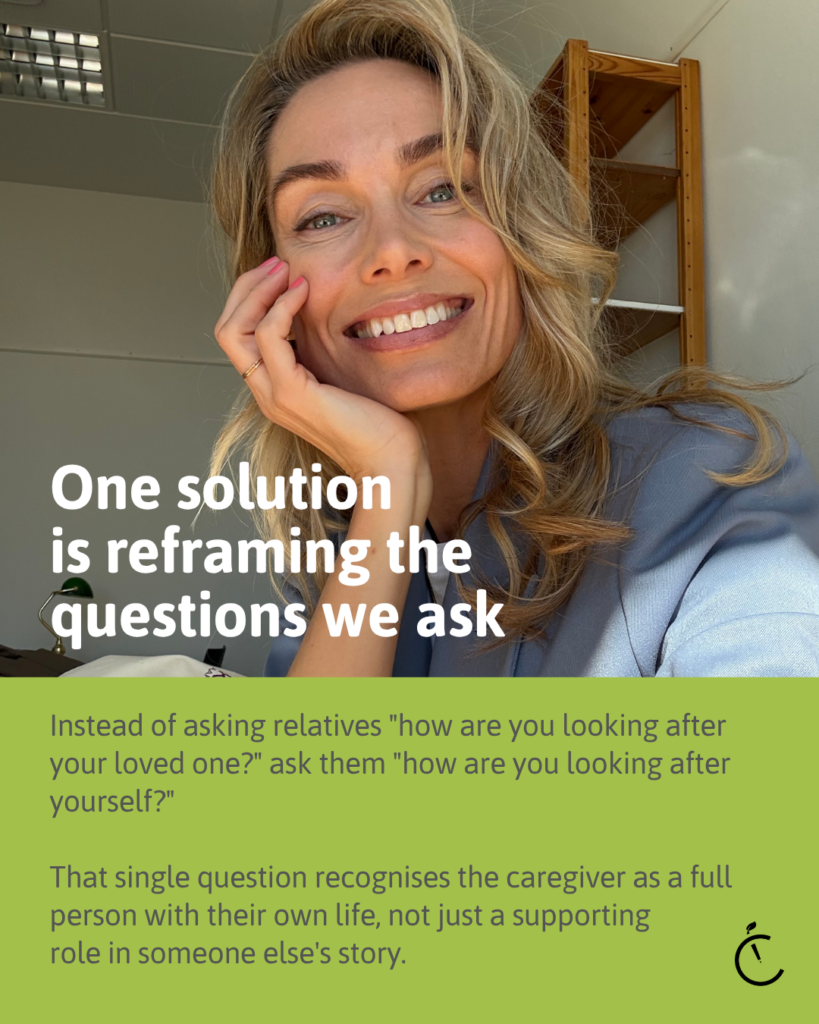
Louise offers practical ways journalists can create more nuanced stories. One is simply to change the questions they ask.
Instead of asking a relative, “How are you looking after your loved one?”, she suggests asking, “How are you looking after yourself?”
The change shifts the focus from the relative as a caregiver to the relative as a person with their own needs, experiences and a future.
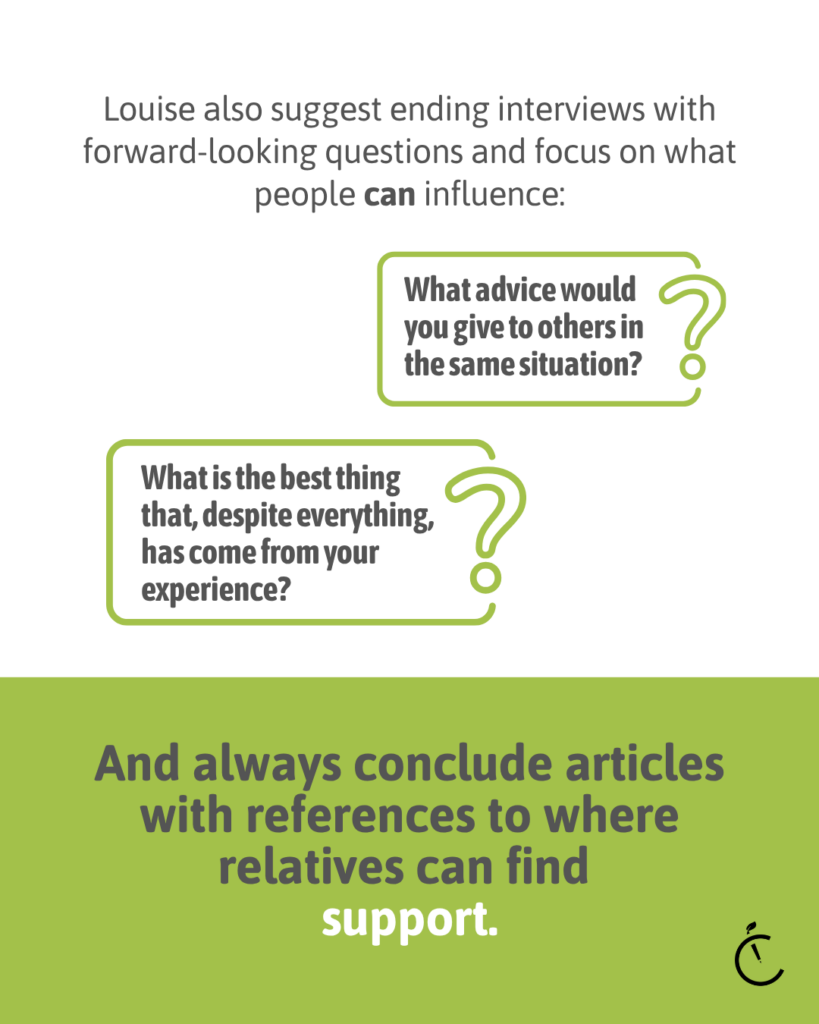
Louise also encourages journalists to ask forward-looking questions: What advice would you give to others in the same situation? What is the best thing that, despite everything, has come from your experience?
And she argues that stories about relatives should include information about where they can find support.
“We’re losing the ability to go in depth with things. But my sensation is that there’s a need for it because people are burning out from this acceleration. We need to return to explaining more, in more detail, with more nuance,” she says.
For Louise, creating more nuanced health journalism starts with spending time with people and listening to their experiences:
“Go out into the world and actually talk to real people. Because those meetings create resonance, connection and empathy.”